
The safest way to choose a roofing contractor in Austin is to verify the company is local and insured, compare detailed written estimates, check recent references, understand who will perform the work, and read the payment and warranty terms before signing. If storm damage is involved, reject any contractor who offers to waive your deductible or act as your insurance adjuster.
If you are researching how to choose a roofing contractor after a storm or before a planned project, the nine questions below give you a fair way to compare companies. Each one is something a reputable Austin roofer should answer clearly and in writing.

Austin homeowners have another reason to slow down after a storm: demand rises quickly, and a rushed decision can leave important details out of the contract. The nine questions below help you compare roofers on workmanship, accountability, and the clarity of their proposal—not just the lowest number at the bottom of a bid.
1. Can you verify your local business information and insurance?
Start with details that can be checked independently:
- Company name, physical address, website, and local phone number
- Certificate of general liability insurance
- Workers’ compensation documentation, when carried
- Names of the people responsible for sales, project management, and final inspection
- Recent local references for work similar to yours
Do not rely only on a logo, yard sign, or social media page. Call the insurance company listed on the certificate to confirm the policy is current and applies to roofing work.
The Texas Department of Insurance recommends using local companies, checking references, and verifying insurance. A local contractor should also be able to discuss how Austin-area heat, wind, hail, roof pitch, tree cover, and ventilation affect the proposed solution.
2. Will you inspect the roof before recommending repair or replacement?
A responsible recommendation begins with an inspection, not a sales assumption. Ask what the contractor will examine and how the findings will be documented.
A useful roof inspection may include:
- Shingles, tiles, metal panels, or other primary roof covering
- Flashing at walls, chimneys, vents, skylights, and valleys
- Roof penetrations, sealants, and pipe boots
- Soft decking or visible signs of moisture intrusion
- Attic ventilation and visible interior leak indicators, when accessible
- Gutters, downspouts, fascia, and areas affected by runoff
Ask for photos and a plain-language explanation of what is damaged, what is still serviceable, and what should be monitored. If you are unsure whether the condition calls for a smaller repair or a full project, review our guide to roof repair versus roof replacement in Austin.
Impact Roofing & Renovation offers free hands-on roof inspections for homeowners in Austin and nearby Central Texas communities. The purpose of the visit is to identify what the roof actually needs before discussing the next step.
3. What exactly is included in the written estimate?
Two estimates are not comparable if one includes a full roofing system and the other lists only shingles and labor. Ask each contractor to put the same categories in writing:

- Removal and disposal of existing materials
- Decking inspection and the price basis for any required replacement
- Underlayment, ice-and-water protection where applicable, and ventilation components
- Flashing, pipe boots, drip edge, fasteners, and sealants
- Manufacturer, product line, color, and material rating
- Protection for landscaping, siding, windows, driveways, and HVAC equipment
- Cleanup, magnetic nail collection, and final walkthrough
- Permit responsibility when a permit is required
- Start expectations, estimated duration, and weather-delay procedure
- Payment schedule, change-order process, and exclusions
A low bid can become expensive when necessary system components appear later as add-ons. Ask the roofer to explain every allowance and any condition that could change the final price.
If you are still planning the budget, see how much a roof replacement may cost in Austin in 2026. Every house is different, so an on-site inspection and written scope are still necessary for an actual estimate.
4. Who will supervise the crew and communicate with me?
Ask whether the workers are employees, subcontractors, or a combination. The label matters less than accountability: you should know who is responsible for the crew, safety, material delivery, property protection, and questions during the project.
Confirm:
- The name and phone number of your day-to-day contact
- Who will be on-site when work begins
- How unexpected decking or flashing damage will be documented
- Whether you must approve a change order before additional work starts
- Who performs the final quality-control inspection
Clear communication prevents small questions from turning into expensive surprises.
5. Which material and ventilation choices fit this house?
The best roofing system is not automatically the most expensive option. It should fit the roof design, the home’s ventilation, your maintenance expectations, the neighborhood, and the written budget.
Ask the contractor to explain why a particular product is being recommended and what alternatives were considered. For asphalt shingles, compare the product line, impact rating if relevant, wind-rating requirements, underlayment, starter strip, ridge cap, and ventilation plan as a complete system. For metal, tile, or low-slope areas, ask how transitions and penetrations will be detailed.
Be cautious when a proposal focuses heavily on the shingle brand but says little about flashing, ventilation, drainage, or installation details. Roof performance depends on the system working together.
6. What workmanship and manufacturer warranties will I receive?
There are usually two different warranty categories:
- Manufacturer coverage applies to eligible roofing products under the manufacturer’s terms.
- Workmanship coverage is provided by the contractor for qualifying installation-related issues under the contractor’s written terms.
Ask for both documents before signing. Find out who you contact, what documentation you must keep, what is excluded, whether coverage transfers to a future owner, and whether registration is required after installation.
A verbal promise such as “lifetime warranty” is not enough. The written terms determine the actual coverage.

7. How do you handle storm damage and insurance-related work?
A roofer can inspect damage, prepare a construction estimate, explain the work it proposes, and answer questions about that estimate. However, the contractor doing the work should not promise to represent you as a public insurance adjuster or negotiate policy coverage on your behalf.
Texas law also prohibits a contractor from waiving, rebating, or absorbing a property insurance deductible. The Texas Department of Insurance explains these contractor and deductible rules.
Good questions include:
- Will you provide photos and a written construction scope?
- Will you tell me before contacting the insurer about additional work or costs?
- How are supplements or change orders documented?
- What is my payment responsibility, including the deductible?
For more context, read Impact’s overview of roof insurance claims. Coverage decisions belong to the insurance company, and questions about your policy should go to your agent, insurer, or a properly licensed public adjuster.
8. What is the payment schedule, and what happens if conditions change?
Never sign a contract with blank sections. Do not pay the entire price before work is complete. A written payment schedule should tie payments to defined milestones, and the contract should explain how change orders are approved.
Before signing, make sure the agreement identifies:
- Total contract amount or a clear method for calculating it
- Deposit and progress-payment requirements
- Acceptable payment methods
- Written change-order procedure
- Cancellation terms
- Warranty documents
- Final inspection and completion process
If a contractor pressures you to sign immediately, leave blanks in the agreement, or pay in full up front, stop and get another opinion.
9. Can I see recent Austin-area work and speak with customers?
Online reviews are useful, but recent references help you ask specific questions. Request projects with a similar roof type or scope and, when possible, in the Austin, Lakeway, Bee Cave, Cedar Park, Round Rock, Dripping Springs, Spicewood, or Westlake area.
Ask previous customers whether the company:
- Started and finished close to the stated schedule
- Protected the property and cleaned the site
- Explained unexpected findings before charging for changes
- Responded after the final payment
- Delivered the materials and workmanship described in the contract
You can also review Impact’s Central Texas roofing and renovation gallery before scheduling a conversation about your own roof.
A simple Austin roofer comparison checklist
Use the same checklist for every bid:
| Item to verify | Contractor 1 | Contractor 2 | Contractor 3 |
|---|---|---|---|
| Local address and phone verified | |||
| Current insurance verified | |||
| Inspection photos provided | |||
| Detailed written scope | |||
| Material system specified | |||
| Crew supervisor identified | |||
| Workmanship warranty provided | |||
| Manufacturer terms provided | |||
| Payment milestones defined | |||
| No deductible-waiver promise | |||
| Recent local references checked |
The goal is not to find the contractor who gives the fastest answer. It is to choose the company that makes the condition of your roof, the proposed work, the price, and the responsibility for the project easy to understand.
Schedule a clear, no-pressure roof inspection
If you need a starting point, schedule a free roof inspection with Impact Roofing & Renovation. The team serves Austin, Lakeway, Bee Cave, Dripping Springs, Spicewood, Cedar Park, Westlake, Round Rock, and surrounding Central Texas communities. You can also call (512) 298-2086.
How to Choose a Roofing Contractor After a Storm
After a hailstorm, door-knockers and out-of-town crews often arrive within days. Slow down. Ask for a local address, proof of insurance and recent references, and never sign a contract that gives a contractor control over your insurance claim. The Texas Department of Insurance explains your rights in its guide to roofing and insurance laws, including why no roofer may waive your deductible.
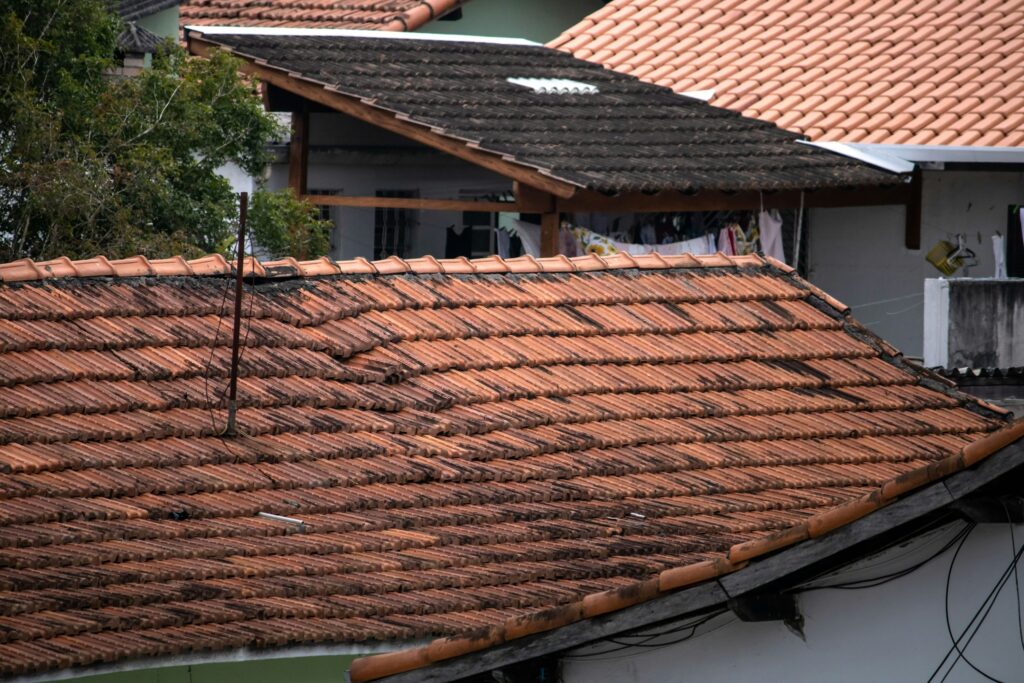
A trustworthy contractor will inspect first, show you photos and give you time to review the estimate. That is how we work at Impact Roofing & Renovation; learn more about us or book a free roof inspection.
Frequently asked questions
What should I ask an Austin roofing contractor before signing?
Ask for verifiable insurance, recent local references, inspection photos, an itemized written scope, the exact material system, crew-supervision details, written warranty terms, a payment schedule, and a change-order procedure. For storm-related work, confirm the contractor will not waive your deductible or act as your insurance adjuster.
Should I choose the lowest roofing estimate?
Not until you compare the scopes line by line. A lower estimate may exclude decking, flashing, ventilation, disposal, permits, property protection, or cleanup. Compare what is included, the materials specified, warranty terms, and who is accountable for the project.
Can a roofer waive my insurance deductible in Texas?
No. Texas law prohibits contractors from waiving, rebating, or absorbing a property insurance deductible. Your insurer may ask for proof that you paid it.
Can a roofing contractor negotiate my insurance claim?
A contractor may discuss its own construction estimate and proposed work. A contractor that will perform the work should not act as a public insurance adjuster or represent you on policy coverage and settlement issues.
How many roofing estimates should I get?
There is no single required number, but multiple written estimates make it easier to compare scope, materials, communication, warranties, and price. Use the same checklist for every contractor so the comparison is fair.