
A roof repair is usually the right choice when the damage is isolated and the surrounding roof system is still sound. A full replacement becomes more likely when deterioration is widespread, leaks keep returning in different places, the roof deck is damaged, or a reliable repair can no longer be integrated with the existing material. Roof age matters, but it should not be the only reason for the decision.
Roof repair or replacement is one of the biggest maintenance decisions an Austin homeowner makes. The guide below compares roof repair and roof replacement side by side, explains how Central Texas heat and hail change the math, and gives you a simple three-step way to decide.

That distinction is especially important in Austin and Central Texas. A ceiling stain may come from one failed pipe boot, a flashing problem, wind-lifted shingles, or a larger roof-system failure. The symptom inside the house does not tell you the full scope of the problem on its own.
The safest first step is a documented roof inspection that looks at the entire system—not a decision based only on what can be seen from the driveway.
Repair vs. replacement: the quick comparison
| What the inspection finds | Repair may make sense | Replacement may make more sense |
|---|---|---|
| Scope of damage | One limited, repairable area | Problems across multiple slopes or roof components |
| Leak history | First leak with a clear source | Recurring leaks in different locations |
| Roof covering | Surrounding shingles or panels remain serviceable | Widespread brittleness, cracking, lifting, or deterioration |
| Roof deck | Decking is dry and structurally sound around the repair | Soft, sagging, rotted, or broadly damaged decking |
| Previous work | Few or no earlier patches | Repeated repairs have not solved the underlying problem |
| Material match | A compatible repair can be installed correctly | Existing material is too deteriorated or difficult to integrate reliably |
| Long-term value | A focused repair can restore reliable performance | Repair would only postpone a near-term replacement |
This table is a starting point, not a substitute for inspecting the roof, attic, flashing, penetrations, drainage paths, and decking.
Start with the cause, not the ceiling stain
Water can travel along decking, rafters, fasteners, or insulation before it becomes visible indoors. The stain on the ceiling may be several feet away from the actual entry point. That is why simply applying sealant above the stain is not a dependable diagnosis.
Common localized sources can include:
- A worn or displaced pipe boot
- Failed flashing around a chimney, wall, skylight, or vent
- A small area of wind-lifted or missing shingles
- A puncture or impact in one limited section
- A valley or transition that is no longer directing water correctly
When the source is limited, accessible, and surrounded by serviceable roofing, a professional roof repair may solve the problem without replacing the entire roof.
When an Austin roof repair is usually worth considering
A targeted repair is generally the more sensible option when the inspection confirms all or most of the following:
- The damage is limited to one area. A small cluster of affected shingles, one penetration, or one flashing detail is different from deterioration across several roof slopes.
- The surrounding material is still flexible and serviceable. A repair must connect to the existing roofing without causing new damage.
- The decking beneath the area is sound. Any wet or weakened decking must be identified and included in the repair scope.
- There is a clear repair method. The proposal should explain what failed, what will be removed, what will be replaced, and how the repaired section will tie into the existing roof.
- The roof does not have a pattern of unrelated failures. A first isolated leak is different from repeatedly repairing new areas.
The goal of a good repair is not merely to stop visible dripping for the moment. It is to correct the entry path and restore the affected part of the roof system.
When replacement deserves serious consideration
Replacement is more likely to provide better long-term value when an inspection finds broader problems, such as:
- Deterioration or storm effects across multiple roof areas
- Repeated leaks from different locations
- Shingles that crack, lift, or lose integrity during attempted repairs
- Soft, sagging, or widely damaged roof decking
- Numerous older patches with no dependable remaining repair path
- A roof covering that can no longer be matched or integrated reliably
- A repair scope large enough that the homeowner would still face replacement soon afterward
No single sign should be used as a sales shortcut. The contractor should be able to show the homeowner photographs, explain whether the issue is localized or widespread, and provide a written scope for the recommended option.
If replacement is recommended, our guides explain how much an Austin roof replacement may cost and how long a roof replacement may take. Actual scope, timing, and price still depend on the specific property and roof system.
How Central Texas conditions affect the decision
Austin-area roofs face a demanding combination of strong sun, high temperatures, wind, hail, sudden rain, and falling tree debris. These conditions do not automatically mean a roof needs replacement, but they can expose weak points that were already developing.
After a storm, two nearby homes can have very different results because of roof orientation, material, tree cover, installation details, and the path of the wind or hail. That is why a neighborhood receiving hail is not proof that every roof has the same damage.
Homeowners who recently experienced hail can use our guide on when to schedule a roof inspection after hail in Austin. Avoid climbing onto a wet, steep, or storm-damaged roof yourself.

What insurance changes—and what it does not
The physical condition of the roof should determine whether a repair or replacement is technically appropriate. Insurance then determines whether a particular loss is covered under the homeowner’s policy.
The Texas Department of Insurance explains that a policy may cover damage caused by a storm, tree, or another covered event, but it will not pay for a new roof simply because the roof is old or worn. Coverage and payment can also differ depending on whether the policy provides replacement-cost or actual-cash-value coverage.
If a recent storm may be involved:
- Photograph visible damage and interior water signs.
- Take reasonable temporary steps to prevent additional damage.
- Save receipts and records.
- Contact the insurance company and follow its instructions before permanent repairs.
- Compare the adjuster’s report with written contractor estimates.
Impact Roofing & Renovation can inspect the physical roof, document observed conditions, explain repair options, and provide a roofing estimate. The insurance carrier decides coverage. Texas law does not allow a roofing contractor who may perform the work to act as the homeowner’s public adjuster or negotiate the claim on the homeowner’s behalf. The Texas Department of Insurance explains that distinction here.
Questions to ask before approving either option
Before signing a repair or replacement agreement, ask the contractor:
- What specifically failed, and where is it located?
- Is the issue limited to one area or present across multiple slopes?
- What did the inspection find beneath the roof covering and in accessible attic areas?
- Can I see photographs of the conditions being discussed?
- How will the proposed repair integrate with the existing material?
- What materials, flashing, underlayment, or decking are included in the written scope?
- What workmanship and manufacturer warranties apply?
- What conditions could change the scope once the roof is opened?
Texas consumer guidance also recommends verifying the contractor’s identity and insurance, comparing written bids, keeping copies of signed agreements and warranty terms, and avoiding anyone who offers to waive an insurance deductible.
A practical three-step decision
1. Document the whole roof
Start with a professional roof inspection that records the condition of the roof covering, flashing, penetrations, drainage areas, and accessible decking or attic spaces.
2. Compare the complete scopes
If repair is possible, ask for a written repair scope. If replacement may be more economical, request a separate replacement scope so you can compare what each option actually solves—not just the initial price.
3. Choose the option that restores dependable performance
The right answer may be a small repair, a larger sectional repair, or a complete replacement. The recommendation should follow the evidence on your roof and your long-term plans for the home.
Schedule a roof inspection in the Austin area
If you are deciding between roof repair and replacement, Impact Roofing & Renovation can inspect the roof and explain the findings in plain language. We serve homeowners across Austin, Lakeway, Bee Cave, Dripping Springs, Spicewood, Cedar Park, Westlake, Round Rock, and the surrounding Central Texas area.
Schedule a free roof inspection or call (512) 298-2086.
Roof Repair or Replacement After a Hailstorm
Hail adds a twist to the roof repair or replacement decision. A few bruised shingles on one slope usually call for a simple roof repair. Widespread impacts across several slopes, cracked shingles and dented flashing often mean the roof system has lost its protection, and your insurer may agree that roof replacement is warranted. Your insurer decides coverage; our job is to document the damage clearly.
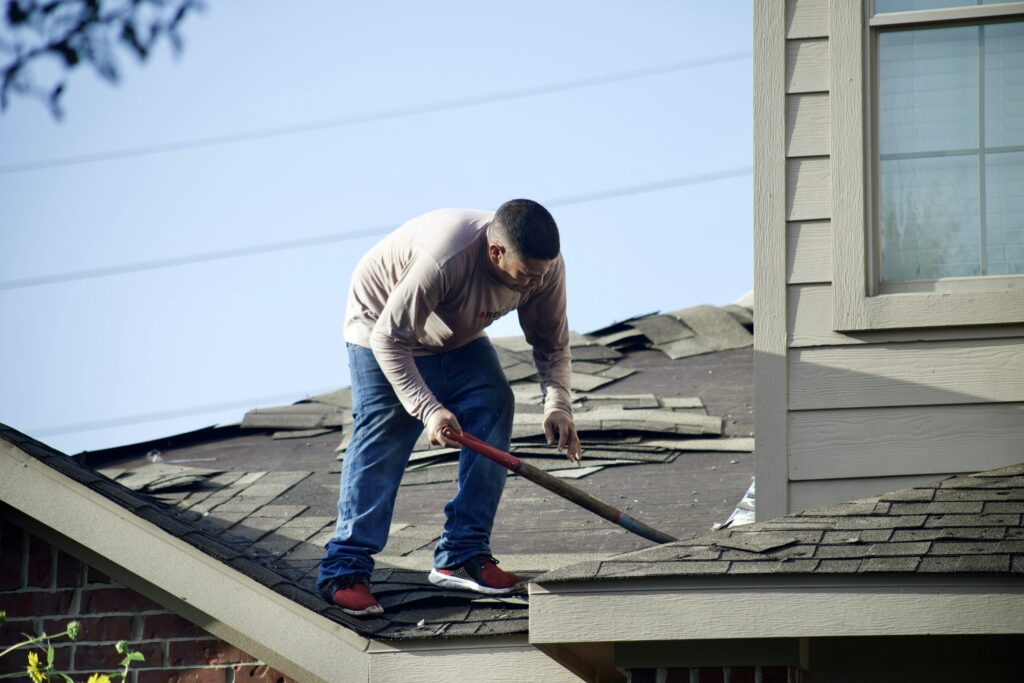
Start with a free inspection and dated photos, then compare a roof repair quote with a roof replacement estimate. If you choose replacement, consider Class 4 impact resistant roofing to reduce future hail damage. Whether you lean toward roof repair or replacement, those photos make the choice clearer. For leaks that need attention right away, see our roof repair service.
Frequently asked questions
Can a leaking roof be repaired without replacing it?
Often, yes. A repair may be appropriate when the leak has one identifiable source, the surrounding roofing is serviceable, and the decking is sound. Multiple leaks, widespread deterioration, or damaged decking may point toward a larger repair or replacement.
Does hail automatically mean I need a new roof?
No. Hail in the area is a reason to inspect the roof, not proof that every roof needs replacement. The decision depends on what the inspection finds, where the damage appears, and whether the roof system can be repaired reliably.
Does an older roof automatically need replacement?
No. Age is one factor. The roof’s present condition, repair history, decking, material compatibility, and extent of damage are more useful when making the decision.
Should I call my insurance company after storm damage?
If you believe a recent covered event damaged the roof, document the conditions and contact your insurer for instructions. Make necessary temporary repairs to prevent more damage, keep receipts, and avoid permanent work until the insurer has had the opportunity to inspect when required.
Can my roofing contractor negotiate my insurance claim?
No. In Texas, a roofing contractor who may perform the work cannot act as the homeowner’s public adjuster. The contractor can document physical conditions, provide technical information, and prepare a roofing estimate; coverage questions belong to the insurer or a properly independent licensed professional.